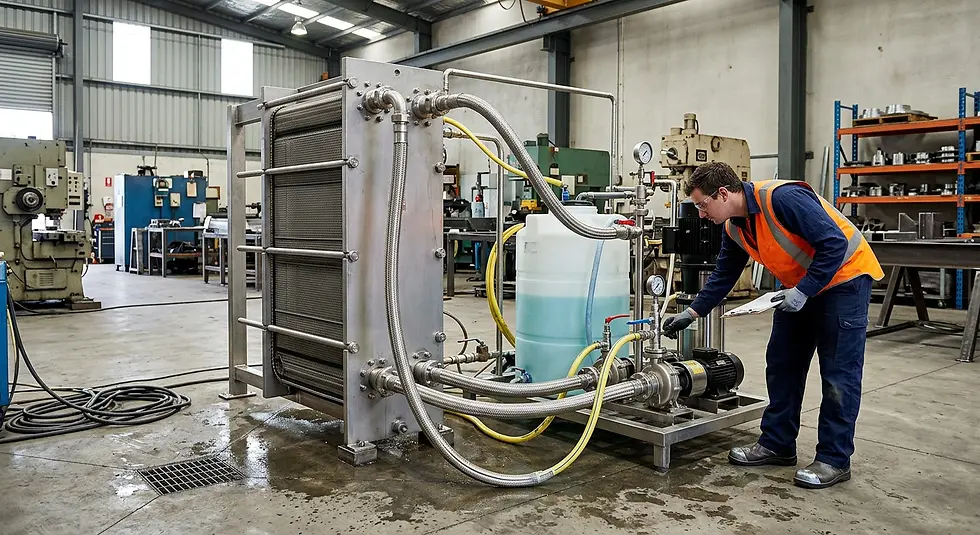
Identifying and Preventing Gasket Failure in Plate Heat Exchangers

The gasket has taken a set in the groove and the leak started on the night shift after the last CIP. Fluid is tracking down the outside of the plate pack, the drip tray is wet, and the approach has opened because you have already backed the flow off to keep the dP from climbing. That is the unit talking. Preventing plate heat exchanger gasket failure starts with reading that leak correctly, not with ordering a full set of plates on the first stain.
We see this pack in the same state you do. The elastomer has either hardened, extruded, chemically attacked, or lost its memory in the groove. Until you know which of those four it is, a new gasket set is a guess.
What the Leak Is Telling You on This Pack
A weep at one port is not the same failure as a wet frame rail along the full length of the pack. Port weeps usually sit on a single damaged or misplaced gasket, a nick in the groove, or a plate that is hanging out of square. A wet rail along the pack means the compressed length is wrong, the elastomer has taken a permanent set, or the duty has moved past what that compound can hold.
Look at the colour and the feel of the leak before you crack the unit. A product on the outside that matches the hot side tells you the hot gasket line has let go. Cooling water on the outside with no product in the cold circuit points at the cold gasket or a cracked plate that is only showing once the pack is under pressure. Mixed fluids in the drip tray mean you are past gasket work and into a plate integrity problem.
Wipe the frame and watch where the wet patch rebuilds. If it rebuilds at one hanging bolt, that bolt is doing more work than its neighbours. If it rebuilds evenly along the bottom rail, the whole pack has lost compression. Write that down before anyone puts a spanner on a tightening bolt. Once the pack is opened you lose the evidence. Shell and tube units are pulled on a different stand when the bundle has to come out.
How the Elastomer Actually Fails
Gaskets do not fail as a single event. The compound ages, then a CIP, a temperature spike or a hanging error finishes the job. Hardening is the most common end state we pull out of industrial plate heat exchangers. The gasket still looks seated. It has no bounce left. Press a thumbnail into a spare offcut from the same batch and compare it to the one in the groove. If the in-service piece does not recover, it has taken a set and it will not seal when you close the unit back to the old dimension.
Extrusion is different. You will see a thin lip of elastomer pushed out of the groove toward the plate field or toward the port. That is over-compression, a pressure spike, or a groove that has been damaged so the gasket has somewhere to flow. Chemical attack leaves the surface tacky, swollen or cracked across the section. Caustic CIP on the wrong compound does that in a few cycles. Ozone and heat do it slowly on an NBR that should have been an EPDM.
Misalignment looks like a leak and is not a material failure at all. One plate rotated, one gasket sitting on the land instead of in the groove, one hanging bolt tighter than the rest. The pack will weep in exactly the same place after you re-gasket if you do not catch that before you close it.
CIP, Chemicals and the Compound
CIP is where a lot of otherwise healthy gaskets die. The plate pack is designed for a duty fluid. The CIP is a different fluid, a different temperature and a different time at temperature. If the compound was specified for the product and never checked against the caustic, the acid and the sanitiser, the gasket is the weak link Industrial radiators
Ask for the last three CIP traces before you blame the plates. Peak temperature, hold time, and which circuit saw the chemical. A hot caustic on an NBR that was fine on milk or a glycol loop will swell, then crack, then extrude on the next close-up. Acid descalers undercut the bond on glued gaskets and leave the elastomer sitting proud of the groove. Once it is proud, the next compression cycle pinches it. Cooling towers on the same circuit change the water chemistry the pack has to live with.
Fouling under the gasket line is the other CIP problem. Scale and protein sit in the groove, the gasket never fully seats, and you tighten to chase the leak. That is how plates get permanently deformed and how the next gasket set fails in the same week. If the last clean left deposit in the groove, the next clean needs a different chemistry or a longer soak, not another quarter turn on the frame. Cooling systems around the exchanger are part of the same duty, not a separate guess.
Cooling tower fill debris does the same job on a process water loop. Fibres and biofilm ride through to the PHE, lodge at the gasket land, and give you a leak path that looks like a failed compound. Pull a sample from the strainer and from the first plate before you write the gasket off.
Tightening, Compression and Frame Length
Every Plate Pack Has a Compressed Length
Every plate pack has a compressed length on the drawing and on the nameplate. That number is not a suggestion. It is the dimension at which the gasket is at the design squeeze. Close shorter than that and you extrude the elastomer and bow the plates. Close longer than that and the gasket never develops the seating stress it needs, so it weeps as soon as the duty pressure comes up.
Measure the hanging length at all four corners before you open the unit and again when you close it. If two corners are sitting 2 mm or 3 mm different, the pack is in a twist and the gaskets on the short side are over-compressed. That is a mechanical problem, not a materials problem. Straighten the frame, check the carrying bar, and only then talk about a new gasket set.
Torque on the tightening bolts is a means to a length, not the target. We still see packs closed “to a feel” because the last fitter did not have the compressed length written on the permit. Write the four corner measurements on the tag and leave them there. The next person who works this unit needs those numbers more than they need a story about how tight it felt.
A rising dP with a stable flow is fouling. A rising dP after a re-gasket with a clean pack is over-compression or a plate that is no longer flat. Do not chase dP with the spanner.
Duty, Temperature Spikes and DP
Gaskets are rated for a continuous temperature and a peak temperature. The continuous number is the one that matters for life. A steam valve that dribbles, a CIP that overshoots, or a start-up that puts hot fluid on a cold pack will take the elastomer through a peak it was never meant to see every shift. The gasket hardens from the inside of the section. By the time the surface looks tired, the core has already lost elasticity Allied Heat Transfer
Pressure spikes do the same on the extrusion side. A pump starting against a closed valve, a control valve that slams, or a filter that blinds and then dumps will push the gasket out of the groove in one event. If the leak appeared immediately after a trip or a changeover, look at the control narrative before you look at the compound.
Approach temperature is the other early warning. When the gasket line starts to bypass, hot and cold streams mix at the edges and the approach opens even if the plates themselves are clean. An approach that has drifted with no change in fouling factor is worth a gasket inspection at
Seawater, Chlorides and Marine Units
Seawater duty is a different gasket conversation. Chlorides, biological growth and the temperature of a tropical cooling loop age compounds that would last years on a closed tower circuit. The plates may be the right alloy and still leak because the gasket was specified for a harbour trial, not for the water you are actually pumping.
On a marine or offshore loop the documentation sits with the Safe Work Australia hazardous chemicals as well as with the plant file. Keep the gasket compound, the plate material and the last inspection record in the same pack as the vessel certificates. When the unit comes ashore or the surveyor asks what is in the frame, you need the compound name and the date it went in, not a memory of a brown elastomer preventing plate heat exchanger leaks.
Rinse the pack with fresh water as soon as it is isolated. Salt left in the groove crystallises, undercuts the gasket and gives you a leak on the next start that has nothing to do with age. That rinse is cheaper than a re-gasket and it is the one step that gets skipped when the shutdown is running long, preventing plate heat exchanger leaks. PHE gasket failure prevention. It sits with Oil coolers.
Reading the Plates When the Pack Comes Apart
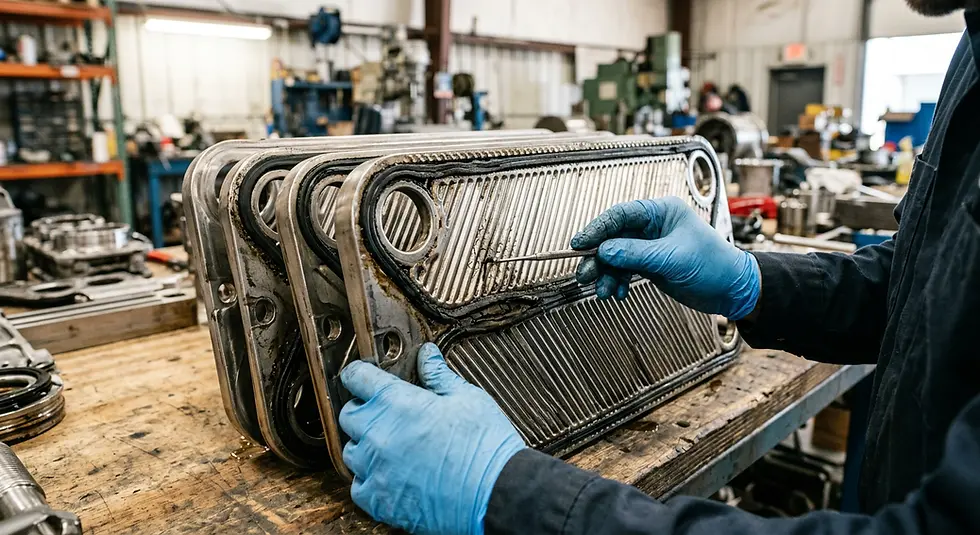
Open the unit on a clean floor with the plates still in hanging order. Do not stack them in a pile. The leak path you care about is still visible on the gasket and on the mating land of the next plate. Photograph the wet plates before anyone wipes them. Then look at the groove preventing plate heat exchanger leaks.
A shiny, polished land means the gasket has been moving. A dark, packed groove means deposit has been carrying the load instead of the elastomer. A groove with a step or a dent means a plate that was nicked on the last pull-apart, and that plate will cut the next gasket in the same place. Mark that plate and take it out of the pack.
Check Plate Flatness on a Known Flat
Check plate flatness on a known flat bar. A banana plate from over-tightening will not seal no matter what compound you put in it. Check the portholes for erosion and the hanging slots for wear. A plate that hangs low sits out of the gasket line and weeps at the port.
Fouling pattern matters. If the deposit stops in a clean line at the gasket, the gasket is sealing and the leak is new. If the deposit walks across the gasket land, the leak has been there for a while and the last CIP was washing both sides of a failed seal.
Re-Gasket, Plate Work or a New Pack
Not every leak is a gasket job. A cracked plate, a corroded porthole or a pack that has lost too many plates to stay inside the compressed length needs more than elastomer. Count the plates against the drawing. If plates have been left out over the years to “make it seal”, the duty has changed and the remaining gaskets are doing work they were not sized for.
Clip-on and snap-on gaskets come off clean and go back on without a glue shop. Glued gaskets need the old compound lifted, the groove solvent-wiped and a controlled cure. Mixing those methods on the same pack is how you get a leak at the join between a glued port ring and a clipped field gasket. Stay with one system on one pack.
We re-gasket industrial plate heat exchangers in the workshop when the plates need dye-pen, flattening or a proper clean that a site CIP cannot reach. Send the pack through repair and maintenance if the grooves are packed, the plates are out of flat, or you do not have a clean, dry area to hang a full pack without picking up grit. Grit in a fresh gasket line is a leak on start-up.
If the nameplate duty, the relief settings or the fluid has changed since the last survey, book the frame and the pack in for pressure vessel inspections before you put it back on line. A re-gasket does not reset the inspection clock on a vessel that has moved duty.
Storage, Spares and the Gasket That Sits on the Shelf
The spare set in the store's cage fails in the packet if it sits in sun, ozone or a hot mezzanine. Keep gasket sets flat, in the dark, away from motors and weld bays. A set that has taken a curl in the box will not sit in the groove. Date the packet when it arrives and use the oldest set first. An elastomer that has been on the shelf for years can look perfect and still have no recovery left.
Match the compound to the duty, not to whatever is in the rack. NBR, EPDM, FKM and PTFE-clad gaskets are not interchangeable just because they fit the groove. The CIP, the product and the peak temperature decide the compound. Write that on the spare so the next shutdown does not become a materials experiment.
Bring a short offcut of the in-service gasket back with the spare set when you order. We can tell more from that offcut than from a description of “the black one that was in it”.
The Check You Run Before the Next Shutdown
PHE gasket failure prevention on this unit is a file, not a feeling. Before the next clean or the next planned outage, pull three things onto one sheet: the last hanging measurements at all four corners, the last CIP peak temperature and hold time, and the date and compound of the gaskets that are in the pack now. Walk the unit and look at the drip tray and the frame rails with the plant at duty, not at idle.
If the hanging length has crept, if the CIP has been running hotter, or if the compound is past the life you would give that elastomer on this duty, plan the re-gasket into that window. Do not wait for the night-shift weep. Order the set against the plate count and the compound, not against a photograph. Isolate, rinse, and hang the plates in order so the groove evidence is still there when we or your crew open it.
Speak with us about the pack on that unit before the next shutdown.