
Emergency Cooling Solutions: Minimising Downtime in Mining Operations

Updated: Sep 10
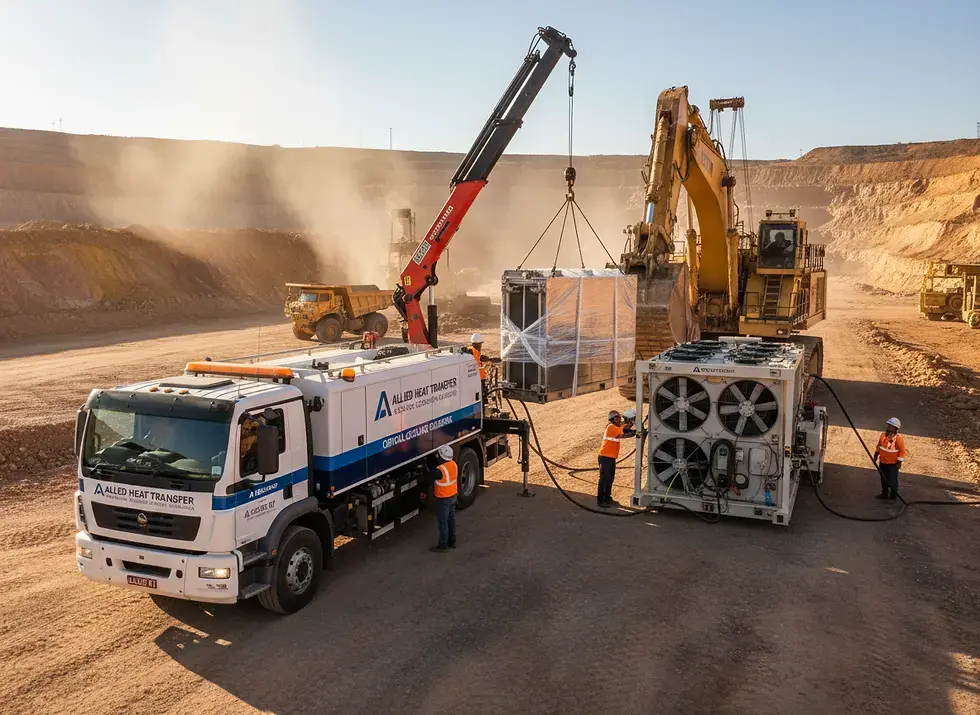
Equipment failure in remote mining operations doesn't just pause production - it cascades through shift schedules, processing targets, and revenue projections. When a primary cooling system fails at a mine site 800 kilometres from the nearest major city, every hour of downtime translates to tens of thousands of dollars in lost productivity. The difference between a minor disruption and a catastrophic shutdown often comes down to one factor: how quickly thermal management can be restored.
Mining operations face unique thermal challenges that compound during equipment failures. Continuous processing cycles, harsh environmental conditions, and remote locations create scenarios where standard repair timelines become unacceptable. A failed cooling system on a crushing circuit or processing plant doesn't wait for convenient maintenance windows or standard delivery schedules. The solution requires immediate deployment of emergency cooler hire services that match the technical specifications of permanent installations whilst repairs or replacements proceed.
The True Cost of Thermal System Failures
Production losses represent only the visible portion of cooling system downtime. A failed shell and tube heat exchanger on a hydraulic power pack can idle an entire mining fleet. A compromised radiator on a mobile crusher stops material processing across multiple operations. The financial impact extends beyond immediate production figures.
Secondary costs multiply rapidly during thermal emergencies. Idled equipment still consumes maintenance resources. Crews remain on payroll without productive output. Downstream processing stages experience material shortages. Contract obligations face potential penalties. Equipment operating outside thermal specifications accelerates wear rates and risks catastrophic component failure.
Mining operations in Western Australia's Pilbara region or Queensland's Bowen Basin face additional complications. Extreme ambient temperatures push cooling systems to their design limits. Dust ingress degrades heat transfer efficiency. Water scarcity restricts cooling options. Remote locations extend response times for both parts and technical support. These factors transform a straightforward equipment failure into a complex operational crisis.
Critical Applications Requiring Emergency Cooling
Mobile Plant and Heavy Equipment
Mining haul trucks, excavators, and loaders generate substantial heat through hydraulic systems and engine operation. A failed industrial radiator on a 400-tonne haul truck removes that asset from production immediately. The thermal load from hydraulic systems alone can exceed 200kW on large mining equipment. Urgent cooling solutions for mining must match these capacities whilst fitting within equipment mounting constraints and withstanding constant vibration.
Hydraulic oil temperature control becomes critical during extended operational cycles. Oil temperatures exceeding 80°C degrade fluid properties and accelerate seal wear. Emergency cooler hire services must maintain hydraulic temperatures within specification to prevent cascading system failures that extend downtime beyond the original cooling equipment issue.
Processing Plant Operations
Crushing circuits, grinding mills, and material handling systems depend on continuous cooling for hydraulic power packs, gearbox lubrication, and bearing cooling. A thermal failure on a primary crusher can halt the entire processing chain. Urgent cooling solutions for mining operations must integrate with existing hydraulic circuits and maintain oil temperatures within 10°C of normal operating parameters to prevent thermal shock to system components.
Conveyor systems spanning kilometres require distributed cooling for drive motors and hydraulic tensioning systems. A single cooling failure can idle multiple conveyor segments, creating bottlenecks throughout the material handling network. Rapid deployment of temporary cooling prevents these cascading effects.
Fixed Plant Infrastructure
Processing facilities, power generation equipment, and compressed air systems require substantial cooling capacity. A failed cooling tower serving a processing plant's water circuit can shut down multiple operations simultaneously. Emergency cooler hire solutions must provide equivalent capacity - often measured in megawatts - whilst permanent repairs proceed.
Compressor cooling represents another critical application. Mine ventilation, pneumatic tools, and processing equipment depend on compressed air systems. Compressor aftercoolers and intercoolers maintain air quality and prevent moisture issues. Emergency cooling maintains these systems operational during primary equipment repairs.
Emergency Cooling Deployment Strategies
Rapid Assessment and Specification
Effective emergency response begins with accurate thermal load assessment. Mining operations should maintain documentation of critical cooling systems including heat rejection capacity, fluid types, flow rates, operating pressures, and connection specifications. This information enables rapid specification matching when failures occur.
Temperature monitoring data from SCADA systems provides valuable context during thermal emergencies. Trending data reveals whether failures occurred gradually or suddenly, informing decisions about root cause investigation and permanent solution requirements. This data also establishes baseline performance targets for emergency cooling installations.
Temporary Installation Considerations
Emergency cooler hire solutions must integrate with existing systems without extensive modifications. Connection compatibility, mounting arrangements, and power requirements determine deployment speed. Air cooled heat exchangers offer advantages for temporary installations through self-contained operation without water infrastructure requirements.
Hydraulic circuit integration requires attention to pressure ratings, flow capacities, and connection types. Emergency coolers must match system specifications to prevent introducing additional failure points. Pressure testing and leak detection become critical steps before returning systems to full operational load.
Electrical supply considerations often limit emergency cooling options at remote sites. Three-phase power availability, voltage specifications, and circuit capacity determine fan motor selections for air-cooled systems. Diesel-powered alternatives provide flexibility when electrical infrastructure proves limiting.
Performance Verification and Monitoring
Emergency installations require verification that thermal performance meets operational requirements. Temperature monitoring at equipment inlets and outlets confirms adequate heat rejection. Flow rate measurements ensure circulation meets design specifications. Pressure drop calculations verify that temporary installations don't create hydraulic restrictions affecting equipment performance.
Continuous monitoring during emergency cooling operation identifies potential issues before they impact production. Temperature alarms, flow switches, and pressure transducers provide early warning of developing problems. This monitoring enables proactive intervention rather than reactive crisis management.
Logistics and Response Time Optimisation
Strategic Equipment Positioning
Mining companies operating multiple sites benefit from strategically positioned emergency cooling inventory. Regional equipment pools reduce response times compared to metropolitan-based suppliers. A 12-hour deployment window versus a 48-hour window can save hundreds of thousands in production losses.
Equipment standardisation across mining operations simplifies emergency response. When multiple sites utilise similar industrial radiators or heat exchanger specifications, emergency inventory can serve multiple locations. This approach balances inventory costs against downtime risk.
Technical Support and Installation Expertise
Urgent cooling solutions for mining deployment requires technical expertise beyond equipment delivery. Proper installation, commissioning, and performance verification ensure temporary solutions maintain production without introducing new risks. Allied Heat Transfer provides technical support for emergency installations, ensuring systems integrate correctly with existing mining infrastructure.
Remote site access presents logistical challenges requiring coordination with mine operations. Site inductions, safety procedures, and access permits must be expedited without compromising safety standards. Established relationships between equipment suppliers and mining operations streamline these processes during emergencies.
Maintenance and Performance Optimisation
Emergency cooling installations operating in harsh mining environments require regular inspection and maintenance. Dust accumulation on air-cooled surfaces degrades performance rapidly. Daily inspections of fin condition, fan operation, and connection integrity prevent emergency solutions from becoming additional problems.
Fluid quality monitoring becomes critical during extended emergency cooling deployments. Oil contamination, coolant degradation, and water treatment all affect heat transfer efficiency. Regular fluid sampling and analysis ensure temporary cooling systems maintain performance throughout their deployment period.
Preventative Approaches to Emergency Situations
Condition Monitoring and Predictive Maintenance
Thermal system failures rarely occur without warning. Temperature trending, vibration analysis, and visual inspections identify developing issues before catastrophic failure. Implementing condition monitoring reduces emergency situations by enabling planned maintenance during scheduled shutdowns.
Thermographic surveys detect hot spots indicating restricted flow, fouling, or failing components. Regular infrared inspections of cooling systems, hydraulic circuits, and electrical connections reveal problems invisible to visual inspection. This proactive approach transforms potential emergencies into managed maintenance activities.
Critical Spares and Backup Systems
Mining operations maintaining critical spares for high-risk cooling systems reduce downtime duration significantly. A spare shell and tube heat exchanger ready for installation converts a multi-day emergency into a shift-length changeout. The capital investment in strategic spares proves minimal compared to production loss costs.
Redundant cooling capacity designed into critical systems eliminates single points of failure. Parallel cooling circuits with isolation valves enable maintenance without production interruption. This approach requires higher initial capital but delivers substantial operational resilience.
Supplier Relationships and Response Planning
Established relationships with thermal equipment specialists enable faster emergency response than cold-calling suppliers during crises. Pre-negotiated emergency service agreements, documented equipment specifications, and tested communication protocols reduce response coordination time from hours to minutes.
Regular communication with suppliers like Allied Heat Transfer ensures awareness of available emergency equipment, typical response times, and technical support capabilities. This knowledge informs contingency planning and enables realistic assessment of emergency response options before failures occur.
Technical Specifications for Emergency Cooling Equipment
Capacity and Performance Requirements
Emergency cooler hire equipment must match or exceed the thermal capacity of failed equipment. Undersized temporary systems create false confidence whilst equipment operates outside safe thermal parameters. Capacity calculations should account for ambient temperature variations, altitude effects on air-cooled systems, and potential fouling during extended deployment.
Heat rejection capacity measured in kilowatts provides the primary specification metric. However, pressure drop, flow rate, and connection sizing equally determine system compatibility. A high-capacity cooler creating excessive pressure drop may reduce system flow rates, negating the thermal performance advantage.
Material and Construction Considerations
Mining environments demand robust construction from emergency cooling equipment. Dust, vibration, and harsh handling during rapid deployment require industrial-grade materials and construction. Aluminium finned cores offer excellent heat transfer but require protective coatings in corrosive environments. Copper-brass construction provides superior corrosion resistance for applications involving treated water or specific coolant types.
Pressure vessel certification becomes mandatory for shell and tube designs operating above atmospheric pressure. NATA testing and AICIP accreditation provide confidence in equipment integrity during emergency deployments where failure could compound existing problems.
Mounting and Installation Flexibility
Emergency cooling equipment requires versatile mounting options accommodating various installation scenarios. Skid-mounted designs with forklift pockets enable rapid positioning without specialised lifting equipment. Modular designs allow capacity scaling by deploying multiple units in parallel configurations.
Connection flexibility through multiple port options and adapter availability reduces installation time. Quick-connect hydraulic couplings, cam-lock fittings, and flanged connections each suit different applications. Equipment designed for emergency deployment incorporates these features rather than requiring field modifications during crisis situations.
Integration with Permanent Cooling Infrastructure
Parallel Operation During Transitions
Optimal emergency response often involves operating temporary cooling alongside degraded permanent systems rather than complete replacement. This approach maintains maximum thermal capacity whilst permanent repairs proceed. Proper hydraulic circuit design with isolation valves and bypass arrangements enables this parallel operation without system shutdown.
Flow balancing between permanent and emergency cooling systems requires attention to pressure drops and pump curves. Unbalanced flows can result in one system handling disproportionate thermal load, reducing overall effectiveness. Temperature monitoring at multiple points verifies proper load distribution.
Performance Comparison and System Optimisation
Urgent cooling solutions for mining deployments provide opportunities to evaluate permanent system performance. Comparing thermal performance between temporary and permanent installations often reveals degradation in existing equipment. This information guides decisions about repair versus replacement for permanent systems.
Operational data from emergency installations informs specifications for permanent system upgrades. If temporary higher-capacity cooling improves equipment performance or reliability, permanent installation of increased capacity may prove economically justified. Allied Heat Transfer assists mining operations in evaluating these permanent upgrade opportunities following emergency deployments.
Conclusion
Thermal system failures in mining operations create operational crises demanding immediate response. The financial impact of production downtime, combined with the technical complexity of mining cooling requirements, makes emergency cooler hire capability essential for operational resilience. Effective emergency response requires more than equipment availability - it demands technical expertise, logistical coordination, and proper integration with existing infrastructure.
Mining operations minimise emergency cooling risks through proactive condition monitoring, strategic spares inventory, and established supplier relationships. However, when failures occur despite preventative measures, rapid deployment of properly specified temporary cooling prevents minor equipment failures from becoming major production disruptions. The difference between hours and days of downtime often determines whether emergency situations remain manageable or escalate into significant operational crises.
Allied Heat Transfer provides urgent cooling solutions for mining backed by 20+ years of thermal engineering expertise and NATA-tested equipment quality. With understanding of mining operational requirements and Australian environmental challenges, the company delivers emergency cooling deployments that maintain production whilst permanent solutions are implemented. For mining operations requiring emergency cooling support or seeking to develop contingency plans for thermal system failures, contact us to discuss technical requirements and response capabilities. Proper emergency cooling planning today prevents production crises tomorrow.


