
Air-Cooled Heat Exchanger Design Perth: High Ambient Temperature Solutions

Updated: Aug 13
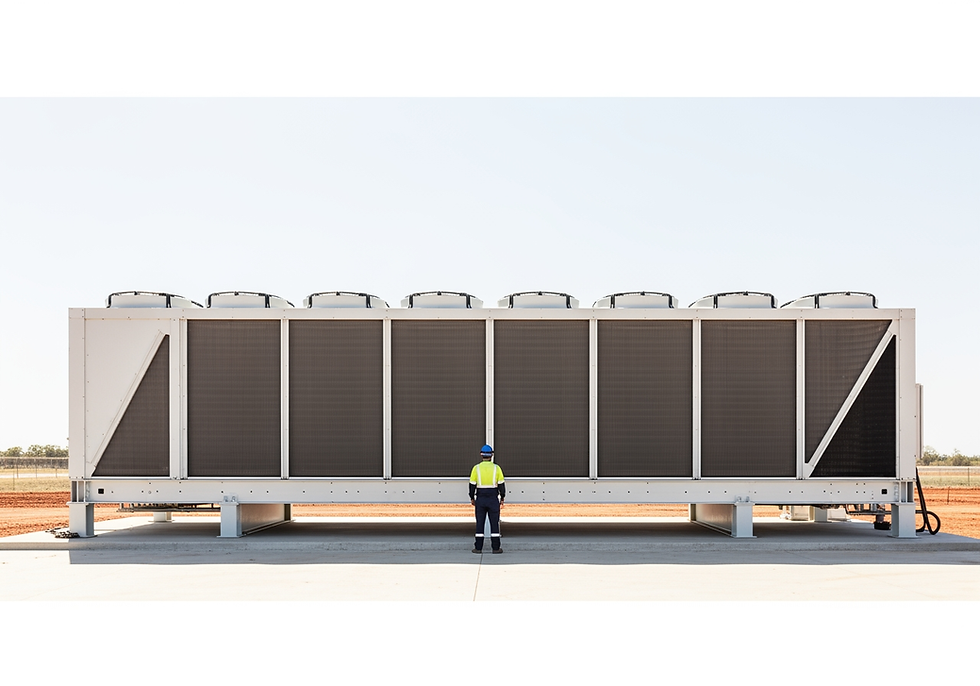
Perth's summer heat pushes industrial cooling systems to their limits. When ambient temperatures exceed 40 degrees C for days on end, conventional cooling equipment struggles to maintain process temperatures. The challenge intensifies across Western Australia's remote mining and processing regions, where extreme heat combines with dust, limited water availability, and continuous operation requirements.
Air-cooled heat exchanger design for high ambient conditions requires specific engineering approaches that standard equipment cannot provide. The physics of heat transfer become less favourable as the temperature differential between process fluid and ambient air narrows. This demands purpose-built solutions that account for Australia's unique thermal environment and the specific demands of high ambient temperature cooling in WA and Pilbara operations.
The High Ambient Temperature Challenge
Reduced Temperature Differential and Its Consequences
Air-cooled heat exchangers reject heat by transferring thermal energy from process fluids to ambient air. The driving force for this transfer is the temperature difference between the hot fluid and the cooling air. When ambient temperatures climb above 40 degrees C, this differential shrinks dramatically - with direct consequences for cooling capacity.
Consider a hydraulic system requiring oil cooling to 60 degrees C. In 25 degrees C ambient conditions, the temperature differential is 35 degrees C. When ambient temperature reaches 45 degrees C, that differential drops to just 15 degrees C - less than half the original driving force. Heat transfer rate decreases proportionally. The system must work harder or accept reduced performance.
Australian industrial operations experience regular summer days exceeding 40 degrees C. The Pilbara region frequently records temperatures above 45 degrees C for extended periods - not just brief afternoon peaks. Air cooled heat exchanger sizing for these conditions must account for worst-case differentials rather than average annual temperatures. Equipment sized for temperate climate assumptions will consistently underperform during Western Australia's most demanding operational periods.
Air Density Effects and Fan Performance Degradation
High ambient temperatures reduce air density. This decreases the mass flow of cooling air through the exchanger. Fan performance degrades as air becomes less dense. Combined with reduced temperature differential, these factors can cut cooling capacity by 40-50% compared to rated performance at standard design conditions.
HTRI thermal design air cooled calculations must model these combined effects across the full range of expected ambient temperatures - not just at a single nominal design point.
Shell and tube heat exchangers provide an alternative cooling pathway for process streams where air cooling alone cannot achieve required outlet temperatures during summer peaks. They are often integrated alongside air-cooled units in hybrid system designs for WA industrial facilities.
Design Strategies for Extreme Heat
Increased Heat Transfer Surface Area
The most direct approach to compensating for reduced temperature differential is increasing heat transfer surface area. A unit designed for 25 degrees C ambient may require 40-60% additional surface area to maintain the same cooling capacity at 45 degrees C ambient. This means larger tube bundles, more tube rows, or extended fin surfaces that account for WA's actual operating conditions rather than international standard conditions.
Air cooled heat exchanger sizing based on conservative design points ensures cooling capacity remains adequate during sustained heat events. High-efficiency fins with optimised geometry maximise heat transfer per square metre while minimising air-side pressure drop. The trade-off between additional surface area and increased fan power consumption requires careful analysis during the air-cooled heat exchanger design phase. Oversizing surface area can reduce fan energy consumption by allowing lower air velocities to achieve the same heat rejection.
Optimised Fin Configuration for Dusty Environments
Fin configuration for high ambient heat exchanger design balances competing requirements. Closely spaced fins increase surface area but trap dust and increase pressure drop. Widely spaced fins reduce fouling accumulation but sacrifice thermal performance. For dusty mining environments, fin spacing of 3-4mm accommodates periodic cleaning without damage while maintaining adequate surface area.
Robust fin construction withstands high-pressure washing and mechanical cleaning.
Aluminium fins brazed to copper tubes provide excellent thermal conductivity while resisting corrosion in harsh conditions. For coastal industrial sites, epoxy-coated aluminium fins extend service life in salt-laden air environments where bare aluminium would corrode prematurely.
Air-cooled heat exchangers designed and manufactured for Australian ambient conditions incorporate these fin geometry and material specifications as standard - rather than adapting equipment built for temperate international markets.
Enhanced Airflow and Fan System Design
Variable Speed Fans and EC Motor Efficiency
Moving more air through the exchanger compensates for reduced thermal driving force. However, fan power consumption increases with the cube of speed - doubling air flow requires eight times the power. Variable speed fan air cooled exchanger systems resolve this by matching fan speed to actual cooling demand rather than running continuously at full speed.
Industrial fans with variable speed drives offer significant advantages in high ambient temperature cooling applications. During cooler morning and evening periods, fan speed reduces to match actual cooling demand - cutting energy consumption substantially while maintaining process temperatures. Modern EC motors with integrated controllers provide precise speed control based on fluid temperature or ambient conditions, achieving 90%+ efficiency compared to 75-85% for conventional AC motors. Over a 15-20 year equipment life, energy savings from EC motors frequently justify their higher initial cost.
Oil coolers and hydraulic cooling systems benefit particularly from variable speed fan control. Load varies significantly across operating cycles. Fixed-speed fans would consume unnecessary power during periods of lower heat generation.
Induced Draft vs Forced Draft for WA Conditions
Fan configuration selection affects both performance and maintenance access. Induced draft arrangements mount fans above the tube bundle, pulling air upward and discharging heated air at elevation - reducing the risk of hot air recirculation back into the intake. Forced draft configurations push air from below, placing fans in cooler ambient air and extending mechanical component life.
For dusty Australian industrial environments, forced draft configurations protect fans from airborne debris while maintaining ground-level access for maintenance. Induced draft suits applications near buildings or enclosed structures where elevated discharge prevents hot air accumulation. Both configurations achieve equivalent thermal performance when correctly designed. The selection depends on site layout and maintenance capability rather than heat transfer fundamentals.
Material Selection for Harsh WA Conditions
Tube and Fin Material Options
Australia's industrial environments combine extreme heat with coastal salt exposure in many areas. Material selection must address both thermal performance and corrosion resistance simultaneously. Carbon steel tubes suit non-corrosive applications but require protective coatings in coastal environments. Stainless steel 316 resists corrosion while maintaining good thermal conductivity. For seawater-adjacent or highly corrosive process fluids, duplex stainless steel or copper-nickel alloys provide superior longevity.
Fin configuration for high ambient heat exchanger material choices follow similar logic. Aluminium fins dominate due to excellent thermal conductivity and low weight. Coastal installations require pre-coated aluminium or alternative materials. For extreme corrosion resistance, stainless steel fins provide long-term reliability at higher initial cost. The choice depends on expected equipment life, site corrosivity category, and total cost of ownership analysis over the full service period.
Thermal consultancy services provide material selection recommendations based on site-specific fluid chemistry, ambient corrosivity, and thermal performance requirements - ensuring air-cooled heat exchanger design specifications match actual operating conditions rather than generic assumptions.
Header, Frame, and Structural Materials
Headers containing process fluids must withstand operating pressures while resisting thermal expansion cycling. Carbon steel headers with internal coating suit most applications. Stainless steel construction eliminates corrosion concerns for critical process duties. Frame materials face direct sun exposure and thermal cycling in Australia's summer conditions. Hot-dip galvanised steel provides structural corrosion protection. Powder-coated finishes offer additional UV resistance appropriate for WA's solar intensity.
Thermal Design Calculations and Design Point Selection
HTRI Methodology and Approach Temperature
Accurate HTRI thermal design air cooled calculations require modelling heat transfer coefficients, pressure drops, and performance across the full range of operating conditions expected at the specific site. Designing for absolute maximum ambient temperature ensures worst-case capacity but results in oversized equipment. A practical approach designs for the 95th percentile ambient temperature - exceeded only 5% of operating hours - balancing equipment cost against occasional reduced performance during extreme events.
Approach temperature - the difference between process outlet temperature and ambient air temperature - directly determines equipment size. A 10 degrees C approach is achievable but expensive. Most industrial applications target 15-20 degrees C approach temperatures as a practical compromise. Reducing approach from 20 degrees C to 15 degrees C may increase required surface area by 30-40%, requiring economic analysis comparing capital cost against operational benefit.
Cooling systems analysis services provide full thermal modelling across seasonal ambient ranges, establishing design points that balance equipment capital cost against performance requirements during WA's summer peak conditions.
Fouling Factors for WA Mining Environments
Dusty conditions in mining and remote industrial sites accelerate fouling on both air and process sides. Conservative fouling factors during air-cooled heat exchanger design ensure adequate performance between cleaning intervals. Air-side fouling reduces heat transfer and increases pressure drop, forcing fans to work harder. Design must account for gradual fouling between maintenance intervals, with accessible tube bundle design facilitating cleaning. Some applications benefit from automated cleaning systems.
Integration with Process Systems
Hybrid Cooling for Peak Ambient Conditions
Some Australian installations combine air cooling with supplementary water cooling for peak ambient events. During moderate weather, air cooling handles the full load efficiently. When ambient temperatures exceed design conditions, a small water-cooled trim cooler provides additional capacity. This hybrid approach reduces water consumption compared to full water cooling while maintaining performance during extreme heat.
High ambient temperature cooling performance also improves through evaporative pre-cooling of inlet air. Wetted media upstream of the tube bundle reduces effective inlet air temperature by 5-8 degrees C through evaporative cooling. This recovers much of the performance lost during extreme heat events without the infrastructure requirements of a full water-cooled system.
Turnkey cooling systems incorporating hybrid air and water cooling, evaporative pre-cooling, and variable speed fan systems are available as engineered packages designed specifically for WA industrial ambient conditions. These industrial cooling solutions are specified and built to account for Australian conditions from the ground up.
Thermal Storage for Perth's Day/Night Temperature Swing
Australia's climate in many industrial regions features day/night temperature swings of 15-20 degrees C, creating an opportunity for thermal storage strategies. Chilled water or glycol storage tanks accumulate cooling capacity during cooler night-time hours for use during peak afternoon heat. This approach reduces required instantaneous cooling capacity while improving overall system efficiency. The strategy is particularly effective for process cooling loads that can tolerate some temperature variation and for facilities with off-peak electricity tariff advantages.
Maintenance Considerations for High Ambient Operation
Fin Cleaning, Fan Maintenance, and Leak Detection
High ambient operation accelerates wear on cooling system components. Fin surfaces require regular cleaning to maintain heat transfer performance. Dusty mining environments may require monthly cleaning during summer, while cleaner industrial sites manage with quarterly intervals. High-pressure water washing removes accumulated dust and debris. Chemical cleaning addresses oil films or other contaminants that water washing cannot remove.
Fan bearings, motors, and drive systems face demanding conditions in high ambient temperature cooling applications. Regular inspection identifies wear before failure occurs during critical summer periods when cooling demand peaks. Belt-driven fans require regular tension checks and periodic replacement. Variable frequency drives require periodic inspection of cooling fans and electrical connections. HTRI thermal design air cooled validation testing after major maintenance confirms performance has been restored to design specification.
Repair and maintenance services include comprehensive inspection, pressure testing, and tube replacement for air-cooled heat exchangers, with workshop turnaround designed to minimise downtime during summer maintenance windows.
Pressure Testing and Compliance
Tube leaks allow process fluid into the air stream or, in pressurised systems, air into the process. Regular pressure testing during maintenance shutdowns identifies developing leaks before they cause process contamination or efficiency loss. Air-cooled heat exchanger design for pressure-containing applications must comply with AS1210 for pressure vessel design and construction. NATA-accredited testing verifies design calculations and construction quality.
Pressure vessel inspections maintain statutory compliance throughout equipment service life, with NATA-accredited documentation satisfying WorkSafe WA requirements for pressure equipment operating in Australian industrial applications.
Conclusion
Air-cooled heat exchanger design for high ambient temperature conditions in Western Australia demands purpose-built engineering. Standard designs prove inadequate when facing 40-45 degrees C summer temperatures that persist for extended periods across the state's industrial regions.
Effective air cooled heat exchanger sizing incorporates increased heat transfer surface area, fin configuration high ambient heat exchanger geometry optimised for dusty conditions, variable speed fan air cooled exchanger systems for energy efficiency, and materials selected for corrosion resistance in WA's coastal and inland environments. Allied Heat Transfer provides engineered industrial cooling solutions across Australia, from individual unit design through to complete turnkey packages for WA mining and processing operations.
For expert advice on air-cooled heat exchanger design for your WA application, contact our air-cooled heat exchanger specialists on (08) 6150 5928.


